Disclosure: Some links on this page are affiliate links. If you buy through them, I earn a small commission at no extra cost to you. I only recommend gear I actually believe in. Thanks for your support! — Jason
You don’t need to spend hundreds of dollars to sound great. There are legitimately excellent microphones under $100 that produce broadcast-quality audio. I’ve used most of these in real productions. Here are the best options and what makes each one worth considering.
#1 Rode PodMic — $99 — Best Overall
The Rode PodMic is my top pick in this category, and it’s not particularly close. This mic was designed specifically for podcasting from the ground up. Dynamic, cardioid, with a built-in pop filter that actually works and an internal shock mount that reduces desk vibration from transferring into your recordings.
The sound is warm, natural, and broadcast-ready. It rejects off-axis room noise well, which is critical for anyone recording in a home office, bedroom, or untreated space. You don’t need acoustic treatment to get professional results with this mic — you just need to get it 6 to 8 inches from your mouth.
If you only have $100 to spend on a microphone, this is the one. Full stop.
Rode PodMic — $99 — View on Amazon →
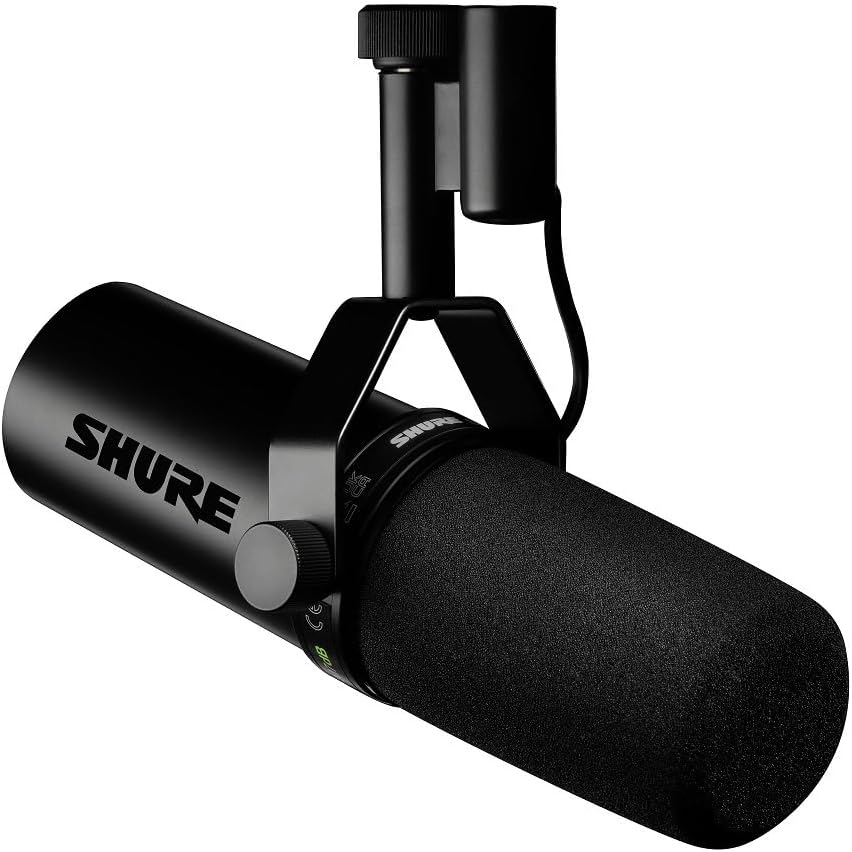
#2 Shure SM48 — $99 — Best for Durability
The Shure SM48 has been a live sound workhorse for decades. It’s built like a tank — this thing will survive drops, travel, and years of hard use. The SM48 has a slightly brighter, more present sound than the PodMic, which some voices respond well to. If your voice is naturally warm and deep, the SM48’s slight top-end lift can add some nice clarity.
It’s also a great choice if you’re using your mic for live recording, events, or travel situations where durability matters. The SM48 and the PodMic are neck-and-neck on price and quality — it really comes down to your voice and use case.
Shure SM48 — $99 — View on Amazon →
#3 Sennheiser e835 — $99 — Best Open Sound
The Sennheiser e835 has a slightly more open, airy sound than either the PodMic or SM48. It’s a cardioid dynamic mic primarily designed for vocal performance, but it works really well for podcasting too — especially if you want a bit more naturalness and air in your recordings.
It’s less noise-rejecting than the PodMic, so if you’re in a noisy environment, I’d stick with the PodMic or SM48. But in a reasonably quiet room, the e835 has a sound profile that some people absolutely love. It’s worth listening to samples if you’re deciding between the three.
What You Also Need (Don’t Skip This Part)
All three of these are XLR microphones. That means they don’t plug directly into your computer — you need either an audio interface or a digital recorder to connect them. This is non-negotiable.
For beginners, I recommend pairing any of these mics with the Zoom H4n Pro ($149). It’s a standalone recorder with two built-in XLR inputs and excellent preamps. Plug in your mic, insert an SD card, hit record. No computer needed during the session.
Zoom H4n Pro — $149 — View on Amazon →
If you prefer recording straight into your computer, the Focusrite Scarlett Solo ($119) is the best entry-level audio interface on the market. One XLR input, clean preamps, USB-C connection. Pair it with either of these mics for a complete setup.
Focusrite Scarlett Solo — $119 — View on Amazon →
Complete Setup Costs
Rode PodMic + Zoom H4n Pro + XLR cable = approximately $265. That’s a fully portable, broadcast-quality recording setup for under $300. Add a basic boom arm and you’re still under $310 total.
Rode PodMic + Focusrite Scarlett Solo + XLR cable = approximately $225. Records directly into your computer via USB. Same professional sound, slightly lower total cost, computer-required workflow.
Which Mic Should You Get?
If you’re a solo podcaster recording in a home office or bedroom, get the Rode PodMic. Warm sound, excellent noise rejection, built for this exact use case. If you need something built tougher for travel or live recording situations, get the Shure SM48. If you want a more open, natural sound profile and you have a fairly quiet recording space, audition the Sennheiser e835.
You can’t make a bad choice in this group. All three are genuinely excellent microphones at a price that makes getting started easy. BOOM.
Comments are closed