Disclosure: Some links on this page are affiliate links. If you buy through them, I earn a small commission at no extra cost to you. I only recommend gear I actually believe in. Thanks for your support! — Jason
These two microphones come up in every serious podcast gear conversation. Both are dynamic cardioid mics. Both are wildly popular in podcasting. Both are from brands with decades of broadcast credibility. But one costs $99 and the other costs $399. Here’s the honest comparison — and a clear answer on which one you actually need.
The Short Answer
Just starting out or on a budget: get the Rode PodMic. Running a professional setup where audio quality is your top priority and you have the right interface to support it: the SM7B is worth every penny. The longer answer explains why both of those are correct.
The Rode PodMic — $99
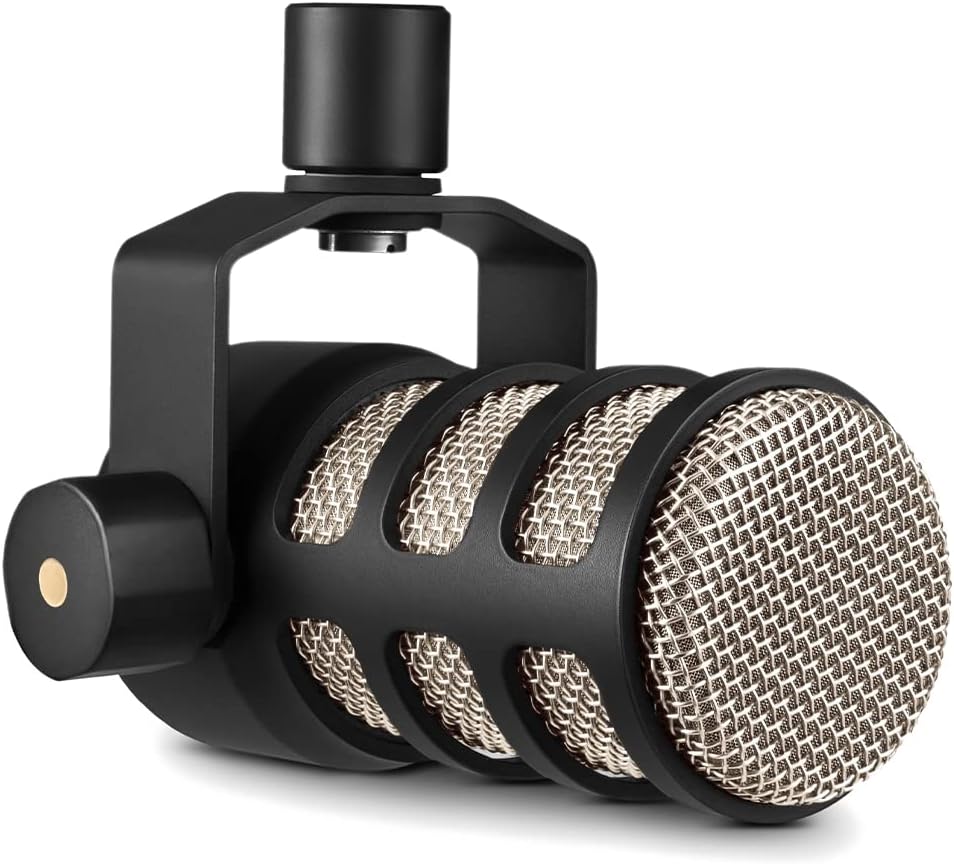
The Rode PodMic is one of the best microphones available at any price point for podcasting. That’s not hyperbole — it was designed from the ground up specifically for spoken word recording. Dynamic, cardioid, built-in pop filter, internal shock mount. It sounds warm, full, and broadcast-ready right out of the box without post-processing.
Its tight cardioid pattern rejects off-axis room noise well — great for home offices and bedrooms that aren’t acoustically treated. Build quality is exceptional. It’s durable, heavy, and feels like a professional piece of gear because it is one.
The PodMic pairs with almost any interface or recorder without issues. Plug it into a Focusrite Scarlett Solo ($119) or a Zoom H4n Pro ($149) and you’re recording professionally from episode one. Total setup cost under $220.
Rode PodMic — $99 — View on Amazon →
The Shure SM7B — $399
The SM7B has been in continuous production since 1973. It captured Michael Jackson’s vocals on Thriller. It’s in broadcast radio studios, professional podcast setups, and voice-over booths around the world. That track record exists because it’s genuinely one of the best dynamic microphones ever made for voice recording.
The sound is rich, smooth, and detailed in a way that takes careful listening to articulate. It’s not a dramatic difference from the PodMic in an A/B test with untrained ears — but audio engineers and experienced podcasters hear it immediately. The SM7B’s frequency response is tailored specifically for vocal intelligibility. The air suspension shock isolation eliminates mechanical noise completely. The switchable response curves let you tune the sound to your voice and room.
The catch that catches everyone: the SM7B is a low-output dynamic mic. It needs a lot of clean gain. If you pair it with a Focusrite Scarlett Solo and crank the gain to compensate, you’ll introduce noise. The proper solution is a Cloudlifter CL-1 ($149) between the mic and the interface — it provides a clean 25dB boost before the signal reaches the preamp. That’s not optional with the SM7B on a Scarlett-class interface.
Shure SM7B — $399 — View on Amazon →
Head-to-Head
Price: PodMic $99 vs SM7B $399. Sound quality: PodMic is excellent; SM7B is exceptional with the right support gear. Ease of setup: PodMic works cleanly with any standard interface; SM7B needs a Cloudlifter or high-gain interface. Total setup cost: PodMic + Scarlett Solo = $218 vs SM7B + Scarlett Solo + Cloudlifter = $667. Noise rejection: both are excellent; SM7B has a slight edge in truly noisy environments. On-camera presence: the SM7B’s iconic silhouette is immediately recognizable and signals professionalism to viewers.
The Real Upgrade Question
Here’s the question worth asking: will your audience hear the difference between a PodMic and an SM7B? For most podcast formats and most listening environments — phones, earbuds, car speakers — the honest answer is probably not in a meaningful way. Both sound professional. Both will hold up well in a competitive podcast environment.
The SM7B upgrade makes more sense when you’re also doing YouTube video where the mic is visible on screen, when you’re doing voice-over work where sound quality is scrutinized closely, or when you’re at the stage of your podcasting career where your setup is a direct reflection of your professional brand.
My Recommendation
New podcasters and budget-conscious creators: Rode PodMic. You will sound professional from day one. Don’t let anyone convince you that you need to spend $400 before you’ve recorded your first ten episodes.
Established podcasters who record consistently, care deeply about audio quality, and have the right interface setup: the SM7B is the upgrade you’ll appreciate for years. Plan for the Cloudlifter. Buy the Rode PSA1 boom arm to handle the weight. Do it right and it’ll be the last microphone you buy for a long time. BOOM.
Comments are closed